Why Your Shed Slab Is the Most Important Decision in Concrete Slab Construction
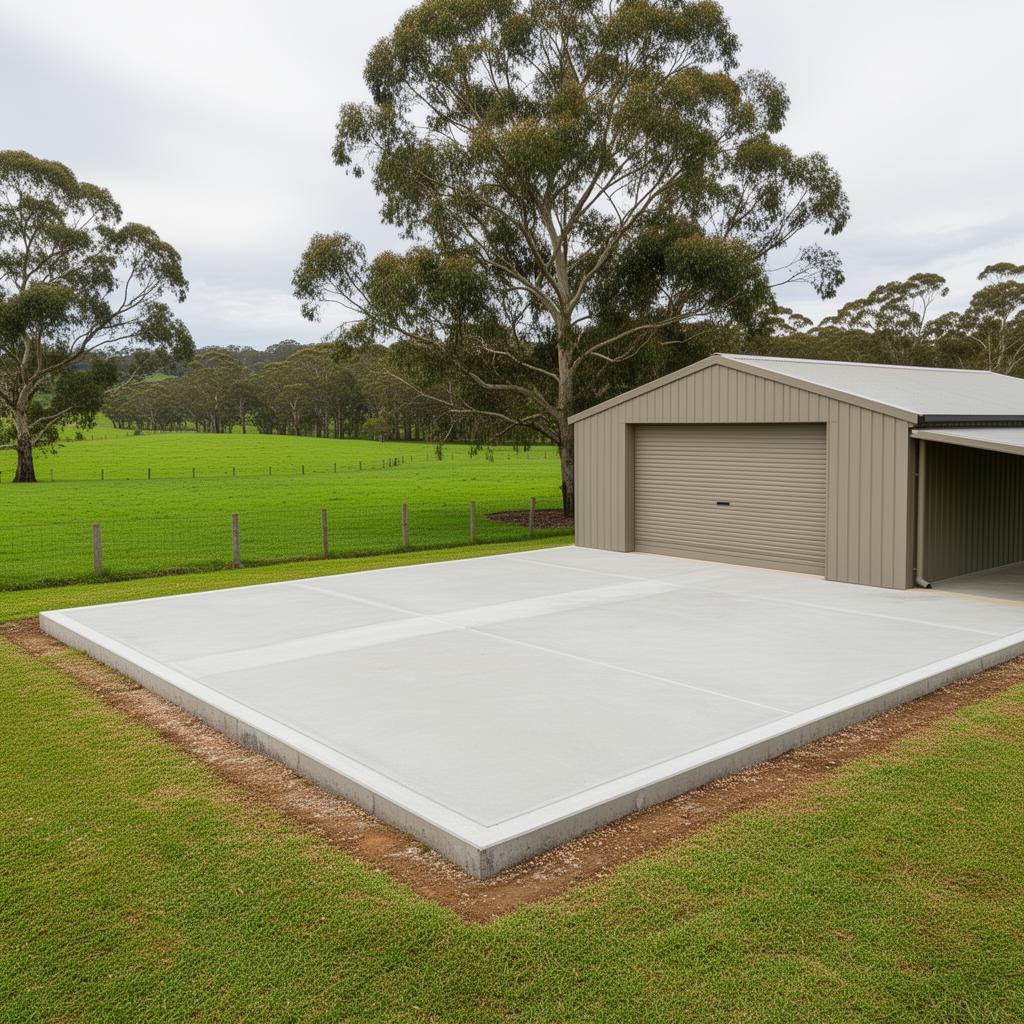
Soil prep, slab thickness, reinforcement and the right concrete mix for shed slabs in Bowral and the Southern Highlands.
A shed slab looks like the simplest pour on a property, but it quietly does more structural work than almost anything else you'll build. Once the shed is up and the racking is loaded, the slab underneath decides whether the whole structure ages gracefully or begins to move within a few winters.
In the Southern Highlands, the biggest risk isn't the concrete itself, it's the ground it sits on. Reactive clays swell in the wet months and shrink in dry summers, so the slab needs to be engineered for that movement rather than poured onto whatever the excavator left behind.
We start every shed slab with a proper cut and fill, compacted road base, moisture barrier and correctly sized reo. Thickness is dictated by intended load, not by habit. A 100mm slab is rarely enough for the machinery most rural blocks eventually park on it.
The final decision that matters is the mix. A 32 MPa mix with fibres, poured on a still day and cured slowly under plastic, will outlast a rushed 25 MPa pour by decades. Get these four things right and the slab becomes the quietest part of the build.
Planning something similar for your home?
More from the Journal
Ready to pour
something built to last?
Speak with the team about your driveway, shed slab, suspended slab or pathway. No obligation, no pressure, just honest advice.